
Last week we announced that Dani May Red had joined Soulcraft’s advisory board. Here is the longer story behind that seat: what Soulcraft and Dani designed and built together over the past year, piece by piece, beginning with a kinder way to be seen, and why every venue on Soulcraft is better for it.
A safe home where creators own their work and make a living
Daniland is a network for models, influencers and designers: thousands of them, each with a place of her own that she owns outright, with the tools of a studio, a magazine, a shop, a stage and a deals desk built in, and her safety kept by the site. It is the first network of its kind, started by Dani on Soulcraft and designed with us from the first week. What follows starts with the kindness, because that came first: how readers are treated on Daniland and on The Street. Then what a creator gets the day she joins, why it beats the places she uses today, and where the network is going.
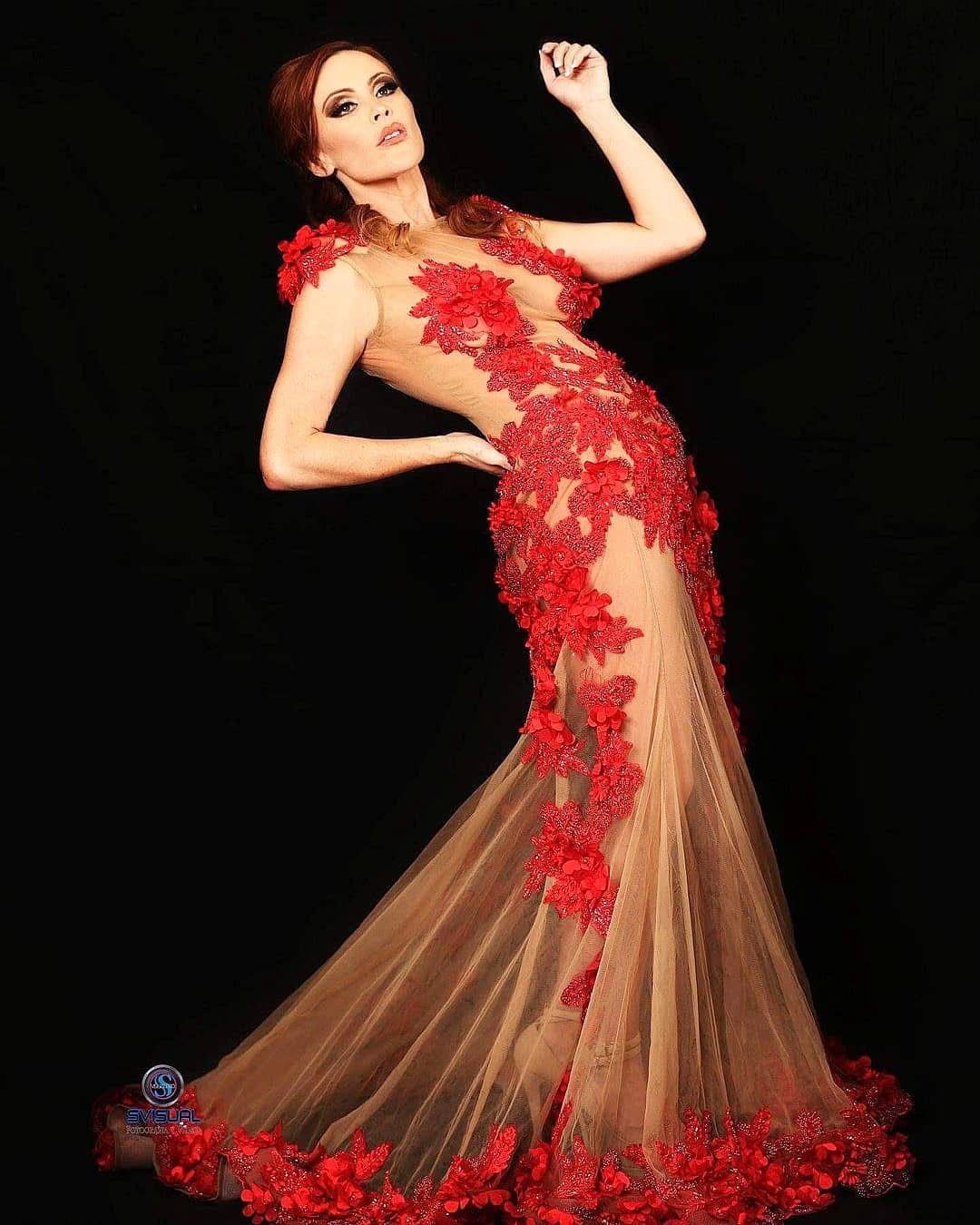
Dani May Red. Everything in this story was designed and built together.
A kinder place to be seen
Dani has spent twelve years on platforms that count her: likes, comments, followers, a number under every picture and a comment box under every number. She was clear from the start that she did not want any of that, and what we designed together instead is the first thing a reader notices about Daniland and about The Street.
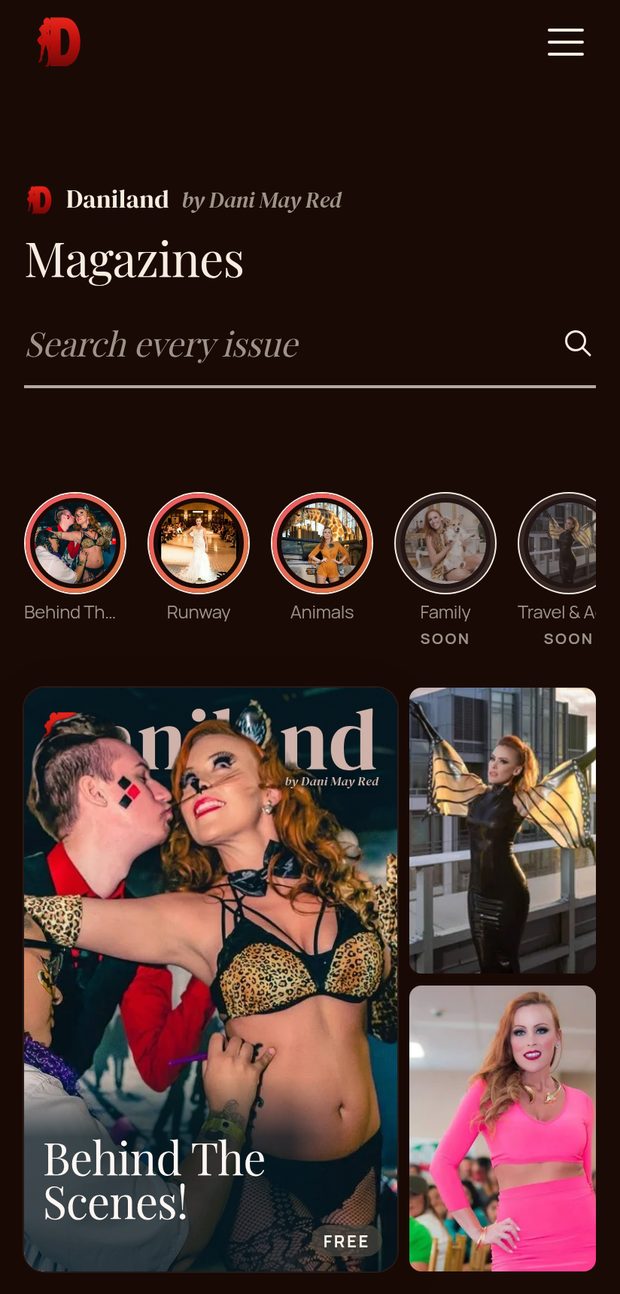
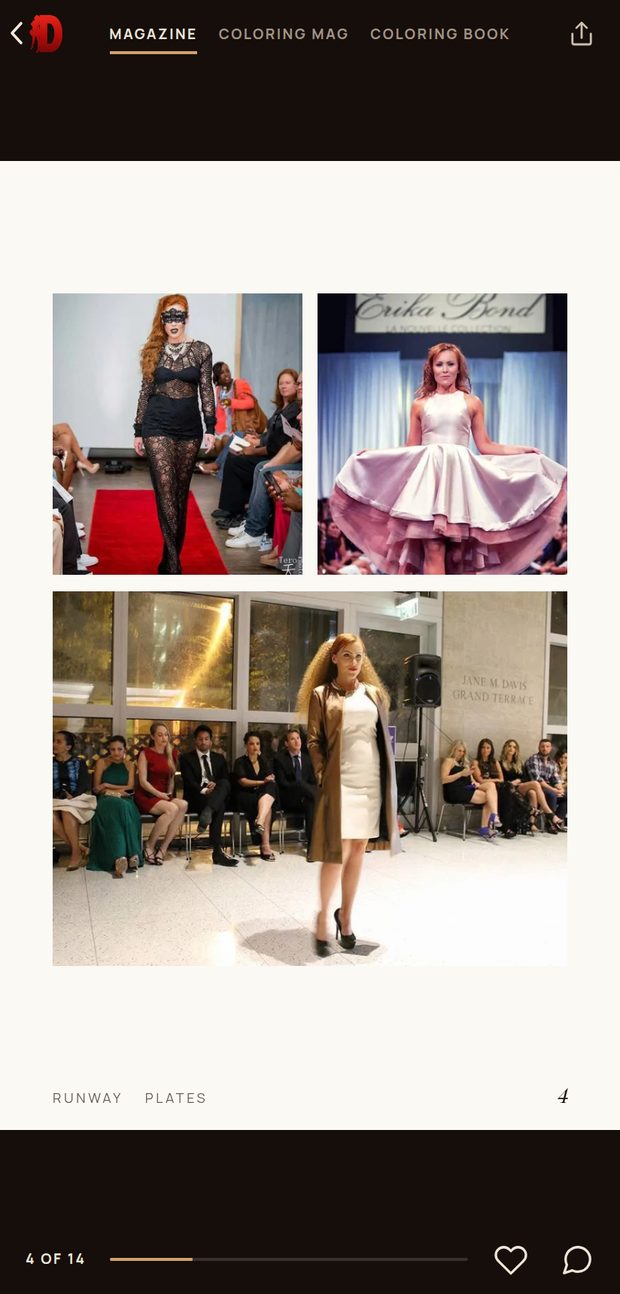
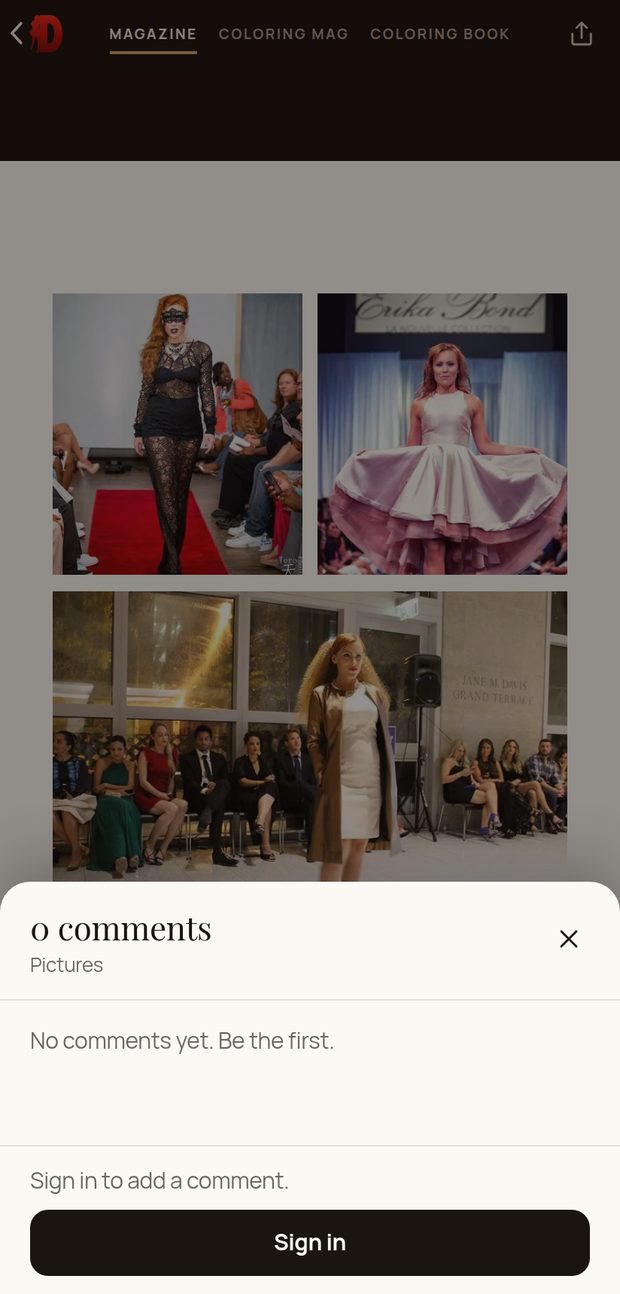
Her magazines as a feed · a page, with its own way to say thank you · signing in once, with a name made for you
No likes, no public comments, nobody ranked. There is no score under her pictures and no comment box under her pages. A reader can thank her, write her a note that only she sees, sign the guestbook at the back of an issue, or send a page to a friend as a postcard. Nothing is counted in public.
One sign-in, a name made for them. A reader who thanks her or writes to her gets a name on the first tap and keeps it everywhere on The Street. The creator and her team answer under their own names, with the venue’s logo.
Kind by rule. A stranger’s first message to the creator waits until she says. A block is a block, everywhere, with one tap, and a blocked person never appears again.
Share is the cover. Sharing a magazine or a page sends its cover and one line as a card to Facebook, Messenger, a Story or a text, and the tap lands on her site. A paid issue shares its cover only; nothing inside leaves.
Follow and be found. On The Street a reader follows a creator and her new issue, show or piece finds them, and the feed has an end, with one quiet email a day.
Dani asked for this for every creator on The Street, not only for herself, and that is how it was built.
What every creator gets the day she joins
One place of her own, with everything she needs already in it. Each of these began as a conversation between Dani and the team, and each was shaped together until it worked on her phone, on a shoot day, in real life.
Her pictures, at full size, forever. Hundreds of photos and films from her phone in one go, kept as originals, made print-ready, drawn into coloring pages, and imported from Instagram with one tap.
One composer, every network. A picture and a line, posted once to her site, to The Street (Soulcraft’s shared feed), and out to Instagram, Bluesky, Facebook and Threads as short previews that link back to her own site.
The ways she earns. Issues that read like a magazine and are printed on demand, pieces and made-to-order things in her shop, live shows on her own stage with tickets and sponsors, and members-only areas.
Casting calls and custom work in one place. Casting calls that fit her, gathered every night; custom orders and brand requests as jobs with quotes, deposits and clear steps; the conversation itself in Messages.
Brands come to her. Offers, contracts and sponsor pages in one place, with a deposit on signing; product links that earn her 85 percent; her press page with rates in her own words.
One inbox, screened. Email, Instagram, Facebook, Bluesky and texts in one place, under her own number; a stranger’s first message is held until she allows it, and anyone she has blocked never reaches her.
Her rules, kept by the site. Family-friendly by rule. A block list, first messages screened, her own evidence kept with each report, a safety page in her words, and nothing of a paid issue sent to anyone who did not buy it.
Everything stays hers. Her address, her pages, her pictures, her readers’ names and her Bluesky account live on her own site, on Soulcraft’s own servers. If she leaves, she leaves with all of it.
Her look, her name, no ads. Her colours, typefaces and logo on every page and every preview; no ranking decides who sees her; no ad sits beside her work; her site and her magazine wear nobody’s name but hers.
Anima, her helper on the site, drafts a line for a post and a reply to a message, suggests the best hour to post, draws every photograph into a coloring page, checks every picture before it goes to print, drafts a quote for a brand deal, and reads her numbers back in plain words. Anima never posts, never sends, never decides. The owner decides, with a tap.
Why here, and not there
The places a creator uses today each give her one thing and take the rest. We laid them side by side with Dani, drawing on her twelve years inside them. This is the table that came out of it.
Instagram, Facebook | OnlyFans | Linktree, Patreon, Shopify | Daniland | |
|---|---|---|---|---|
Who holds her audience | The feed; she rents reach | The site | Spread across three bills | She does: names, addresses, follows |
Can a reader tap through | No links in posts | Inside only | Yes, from a list | Yes, from every post, page and preview |
What it costs her | Free; selling needs another site | 20 percent | Monthly fees plus a cut | 5 percent, charged in her own name |
What it asks of her | Post daily or disappear | Undress | Assemble it herself | Make her work; the site does the rest |
Safety | Report and hope | Her own problem | None | Block list, screened first messages, family-friendly by rule |
A magazine, a stage, print | No | No | No | Built in, on her own address |
Jobs and brand deals | In her DMs | No | No | Castings, quotes, contracts and deposits in one place |
Her look and name | Their template | Their template | Their template, her logo | Her colours, her typefaces, her logo, no ads |




Dani, and a lemur with opinions · Dani and a zebra who wanted in on the selfie · Dani and Soly, her horse · in Heidi Fish’s Vintage Glam, from Heidi’s site
The magazine, every page
Runway, issue one: fourteen pages you turn on a phone, and the same issue printed by a press. The cover, the masthead, a contents page with the ways to buy it (read it on your phone, free; the printed magazine; the coloring magazine; the coloring book), then the picture pages. A tap on any page can open a shop; a page can be a film; the whole issue is shared as its cover with a link back to her site. Dani wanted a magazine, not a grid, and she wanted the cover to open it. We designed the reader together, page by page, until it felt like paper in the hand.
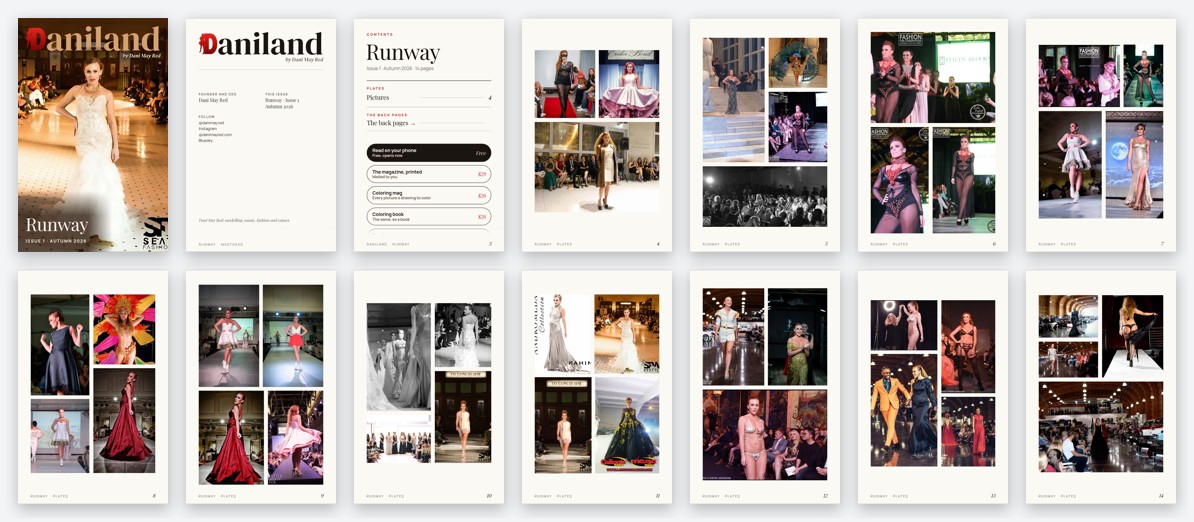
The fourteen pages of Runway, issue one.
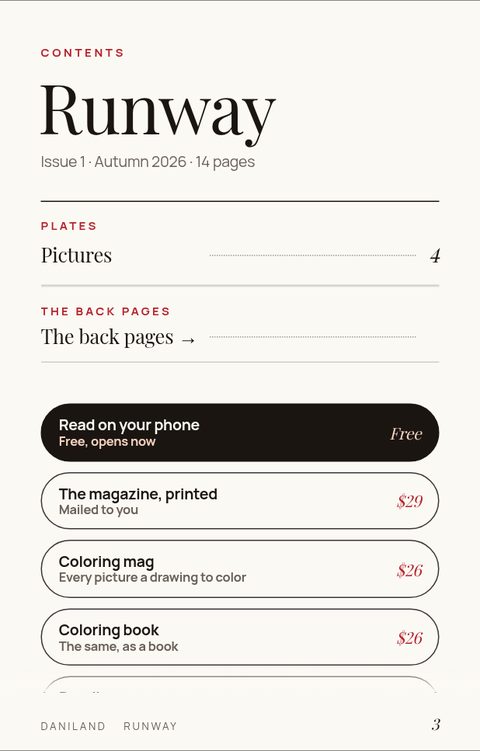
The contents page of Runway, with its buy list: read it on your phone, the printed magazine, the coloring magazine, the coloring book.
The coloring editions, and the print shop
Every issue is also a coloring magazine and a coloring book, and all three are printed on demand. The coloring magazine is the same issue, page for page, with every photograph turned into a line drawing: colour it on the phone with a fingertip, or buy it printed on paper that takes crayon. The coloring book is the cover, then one drawing a page in the magazine’s order, printed one side only so markers never show through. Forty-one drawings make an 82-page book, coil-bound.
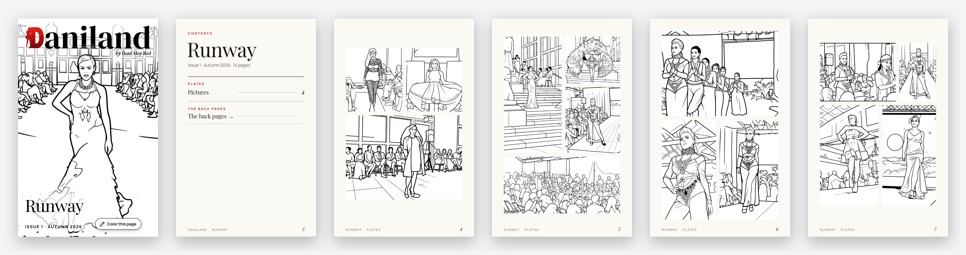
Runway with every photograph drawn as a line drawing.
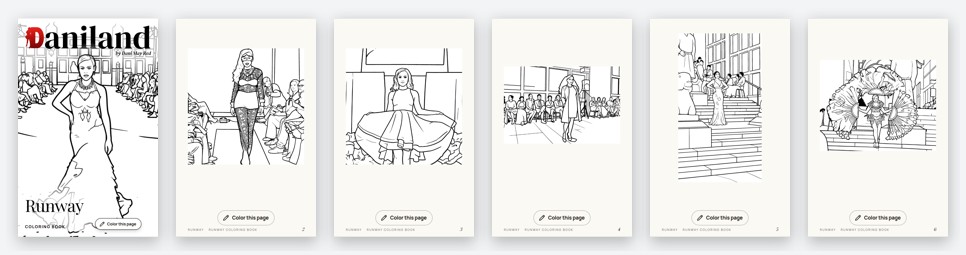
The coloring book: one drawing a page.
The print shop. Every issue and every coloring edition is also a thing in her shop, printed on demand by the press and posted to the buyer with tracking and a letter at each step. The buyer pays once; the press is paid from it; she keeps the rest, minus five percent. A print proof is made automatically whenever an issue changes, so nothing goes to the press that would come back wrong. Dani ran the first real print jobs with us, and everything she found along the way, from the proof to the postage, is in the shop today.
The stage, in three modes
A live theater on her own site. We designed the Velvet Theater together as a place rather than a video page, and it has three modes.
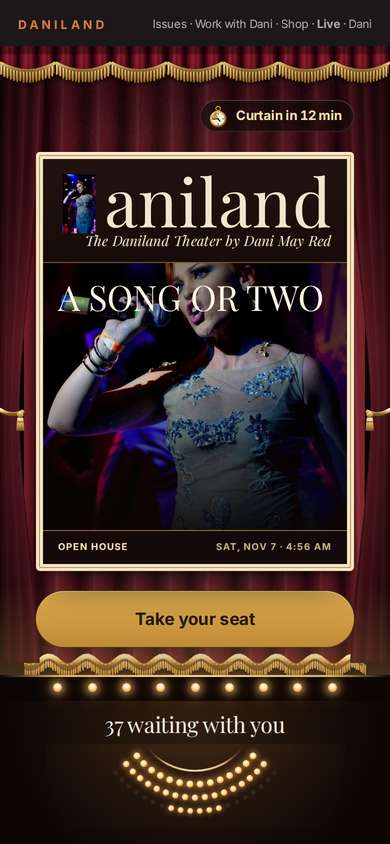
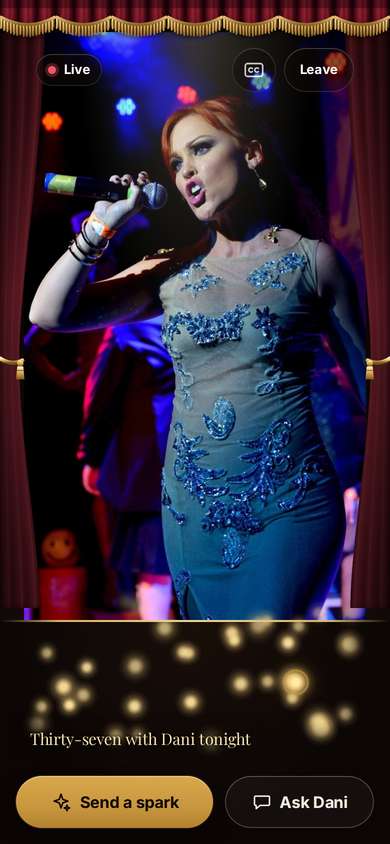
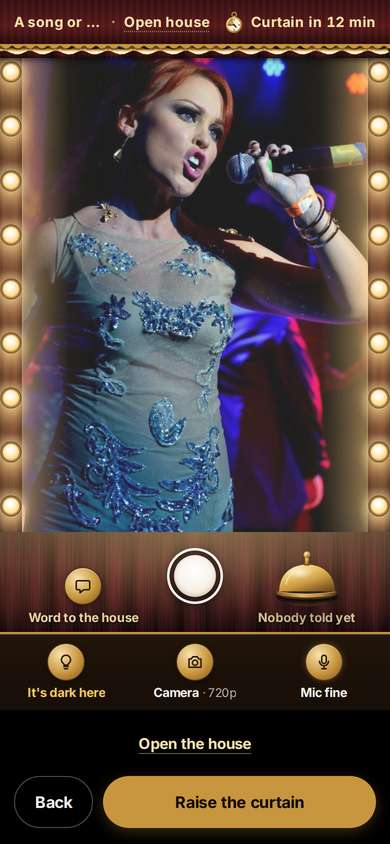
Closed, the next show’s sign · open, the show on · backstage, before the curtain
Closed. Between shows the front of the stage is closed and the next show’s sign hangs on it: the name, the night, the time, and one button that takes a seat. A theater between shows is still a place, never a dark page.
Open. At showtime the front opens and the show fills the stage, her face as large as a real house would show it. The audience is in the room: the count of who is with her tonight, applause sent up, a word to Dani.
Backstage. Her own place behind the curtain: the mirror, her camera inside the stage’s frame, a note to the audience before the doors open, the alert that tells her followers, and the one button that raises the curtain. A members’ room behind the show is next on the list.
The Velvet Theater is Daniland’s. Every other kind of venue picks the stage that fits its trade. The stage dresses everything in the room, the curtain, the seats, the sponsor’s name, the buttons, and the show is the same show: tickets or free, a recording kept afterwards, the audience visible in the room.
Ten stages, whole
Each venue picks the stage that fits its trade; the show is the same show on all ten. The Velvet Theater, the Workshop Bench, the Photo Booth, the Dive Bar, the Studio Floor, the Gallery, the Lodge, the Kitchen Pass, the Runway and the Salon.
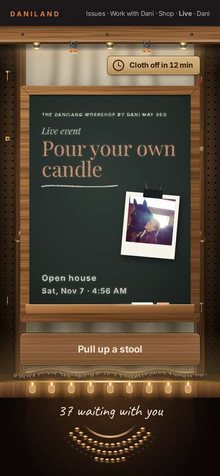
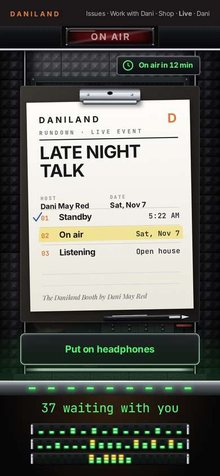
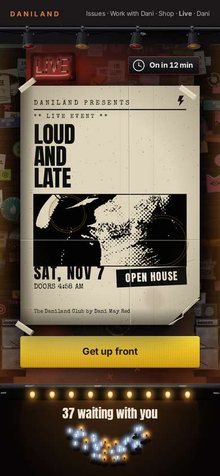
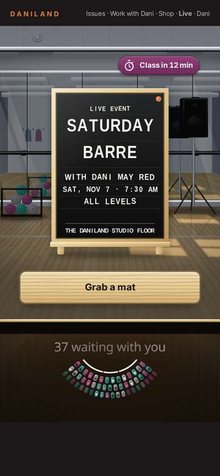
The Velvet Theater · the Workshop Bench · the Photo Booth · the Dive Bar · the Studio Floor
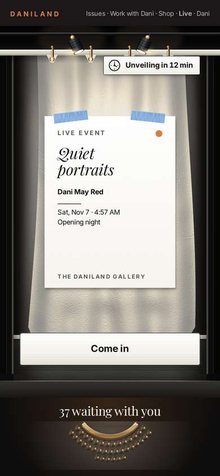
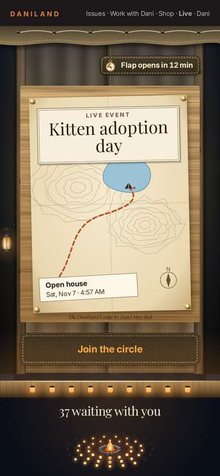
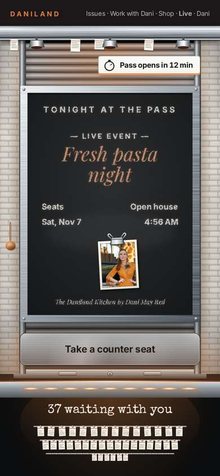
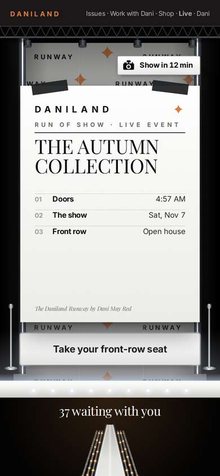
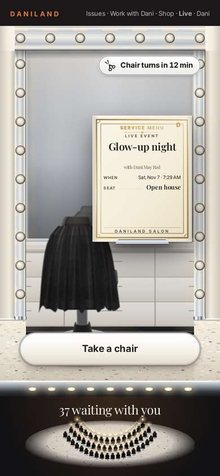
The Gallery · the Lodge · the Kitchen Pass · the Runway · the Salon
Behind the curtain, and the sponsor on the sign
Backstage is hers alone; a sponsor’s name goes on the sign, in the stage’s own lettering. When a brand sponsors a show, the sign says so: Presented by and the name, set in the stage’s own lettering under the show’s title, where every person taking a seat reads it. The sponsorship is sold on her Deals desk and paid to her own account. The stage never carries a banner, a pop-up or a tracker.
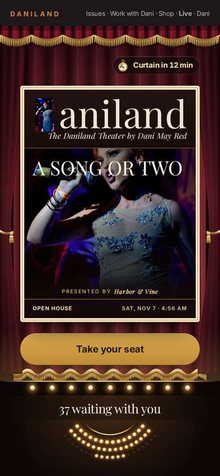
The Velvet Theater’s sign with a sponsor’s name on it, in the stage’s own lettering.
How Daniland and The Street help every other venue
Nothing here is Daniland-only. Everything in this story, the magazine and its coloring editions, the stage, the shop, the deals desk, the posting tool, the safety rules, lives in the one system every venue runs on. The day something new arrives for Dani it is there for a candle bar, a kitten rescue, a chef’s table and a swimwear designer alike. Built once, together, on the same system every venue runs on.
The Street sends people home. The Street is the feed they all stand on: a reader who follows a candle bar and a model sees both in one place, and each post opens at the venue it came from. Nothing is copied out of a venue; The Street is a window on it. A venue listed there is found by people who never knew its address.
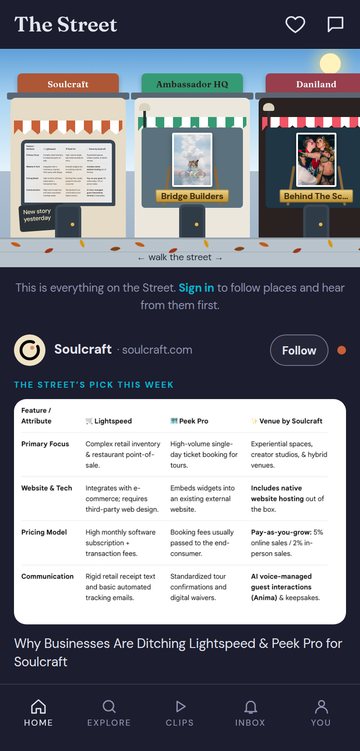
The Street, this morning: posts from every venue, each opening at home.
A creator with no site gets one in a day. Daniland’s network makes a venue for each creator Dani brings in: her own site, shop, magazine and stage from the first day, under Dani’s rules. Two are in today, Daniland and Heidi Fish; the shape is built for thousands. Dani’s shared magazine rack and her fit video are the next things the network carries.

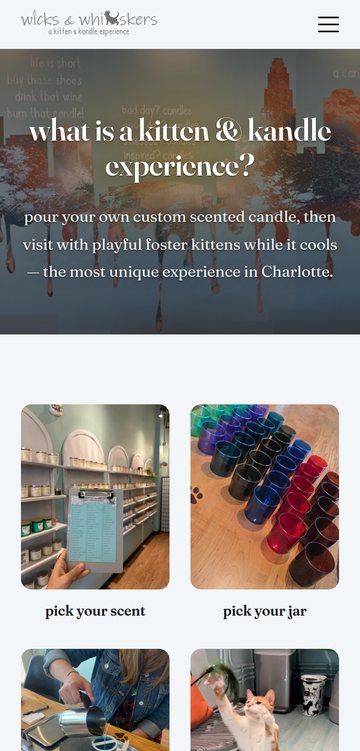
Heidi Fish: a swimwear designer’s venue, made by Daniland’s network in a day · Wicks & Whiskers: a candle bar and kitten rescue in Charlotte, on the same system
A safe way to book her
Every job is a clear set of steps both sides can see, from the request to the pictures coming back. The photographer sees one page and Dani sees her Jobs desk; money and safety are the steps themselves.
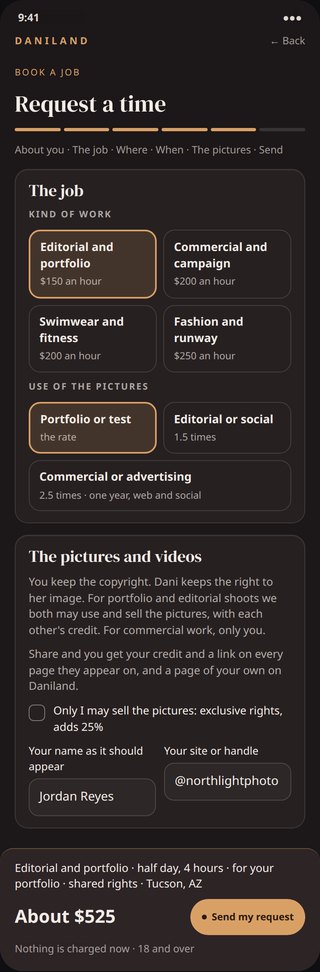
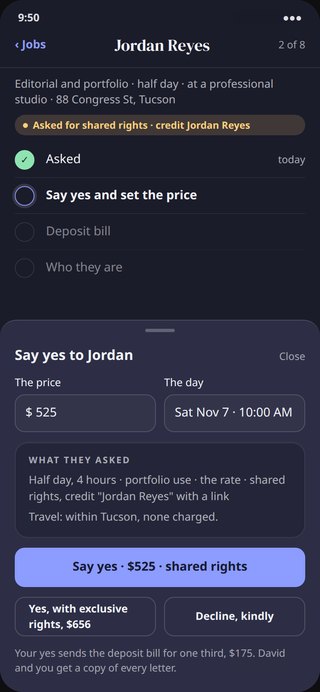
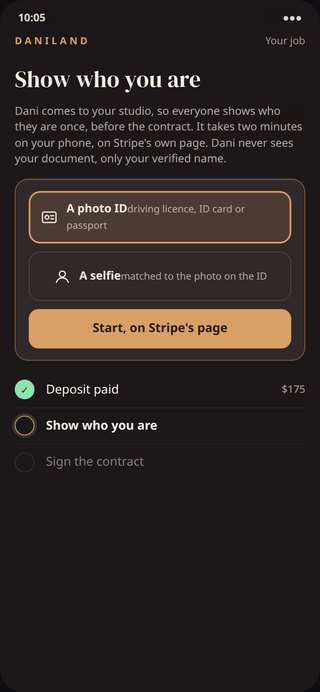
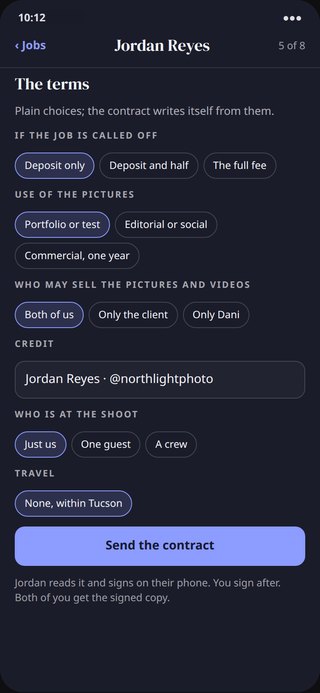
The photographer asks · Dani says yes and sets the price · who they are: photo ID and a selfie · the terms, in plain choices
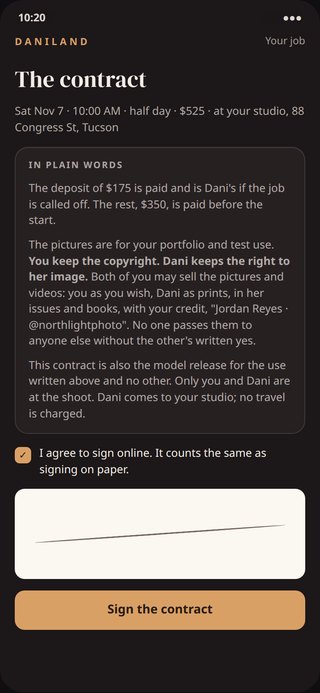
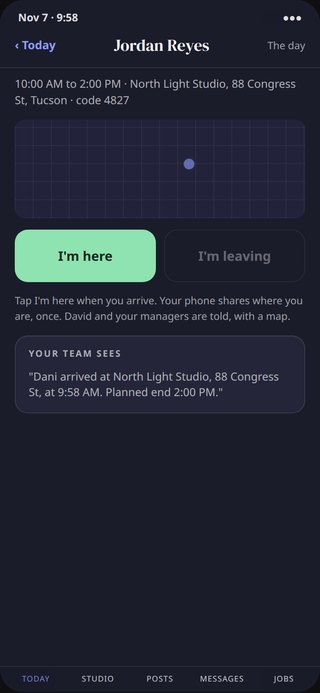
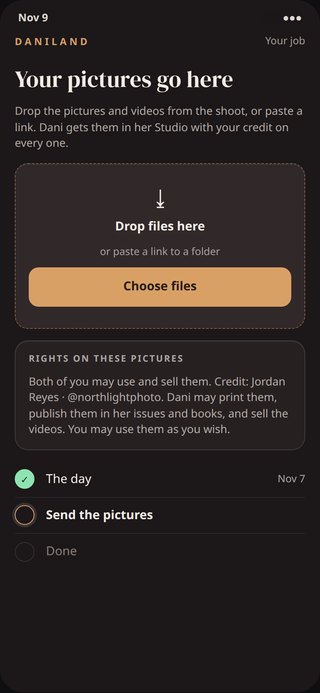
The contract, signed by both · the day: I’m here, I’m leaving, the team watching · the pictures come back, with the rights on each
The deposit is one third and hers if the day is called off. The person shows a photo ID and a selfie on Stripe’s page before any contract, and Dani sees only the verified name. The contract writes itself from her plain choices and both sign on their phones. On the day: a code at the door, “I’m here” and “I’m leaving,” and an alarm to her team if nothing is tapped. The pictures land in her Studio with the rights on each. Designed with Dani this autumn, from what a shoot day is really like; her Jobs desk has these steps today.
Deals on her desk
The first deals came in by hand; the automated deal flow finds the next ones. The first three were a skincare maker (a page of its own in each issue, printed and on every phone, and two live classes about skin and makeup on her stage), a jeweller making custom, exclusive pieces for Dani alone, and new photography, booked the way the steps above show, with the rights written down for every picture before the shoot and both credits on every page. Each offer, contract and invoice is handled the same way as every deal, and the money lands in her own account.
Then the automated deal flow, which works on its own: 416 brands, agencies, marketplaces and places on her list, each with the way to reach it; 286 of them fit her today; nine letters to brands, eight sent in her words and one waiting for her yes; six casting calls found for her today on the public lists, which she applies to herself, because nothing is ever paid on her behalf.
Anima writes a letter to each brand in Dani’s words, with her rates and her press page, and sends it the way that brand prefers. Once Dani switches it on, up to ten letters a day go out on their own, and she can pause any of them. Replies come to her Deals desk, not her inbox. A booked deal becomes a contract, a sponsor page and an invoice paid into her own account, with Soulcraft’s five percent and nothing else taken out. More brands are in talks for sponsor pages, evenings on her stage and pieces for her shop.
The agreement, in plain words
One screen, five promises, before anything else. The first time a creator signs in to manage her site she sees this, and taps once. It is shown again only when a word of it changes, and her tap is recorded with her name and the date. No fine print stands behind it that says otherwise; “Read the full words” opens the same promises, line by line.
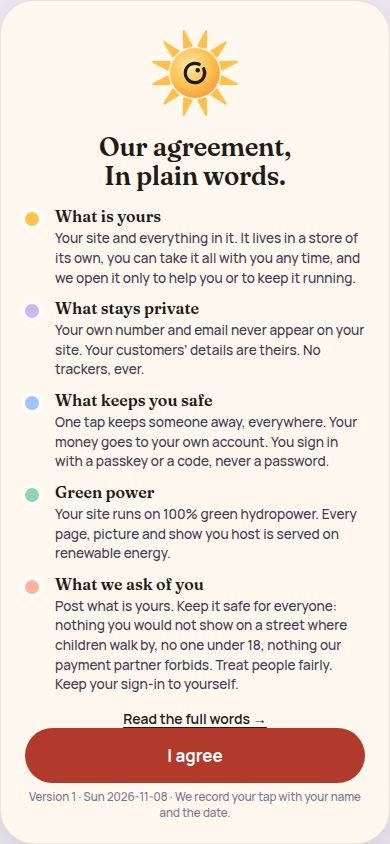
The agreement screen: a sun, five coloured points, and one button.
Designed and built together
Dani has been the first creator and the co-designer. The magazine and its coloring editions, the shop, the stage, the deals desk, the network, the safety rules, the fit video and this agreement were shaped with her, from her real work and from what she reported from the field week by week: what was slow on her phone, what a reader could not find, what a brand asked for, what felt unsafe. Everything in this story was designed and built together, Soulcraft and Dani, to answer a question she asked.
Daniland was the first creator venue on Soulcraft. It will not be the last, and the ones that follow will be better for this partnership. If you make things for a living and have never owned the place you make them, start with her magazine at danimayred.com. Then come and find us.
— David Snelling, CEO, Soulcraft, with Dani May Red, Founder and CEO, Daniland, Creative Advisor, Soulcraft